Gray Blending vs. Root Touch-Ups: Which Is Right for You?
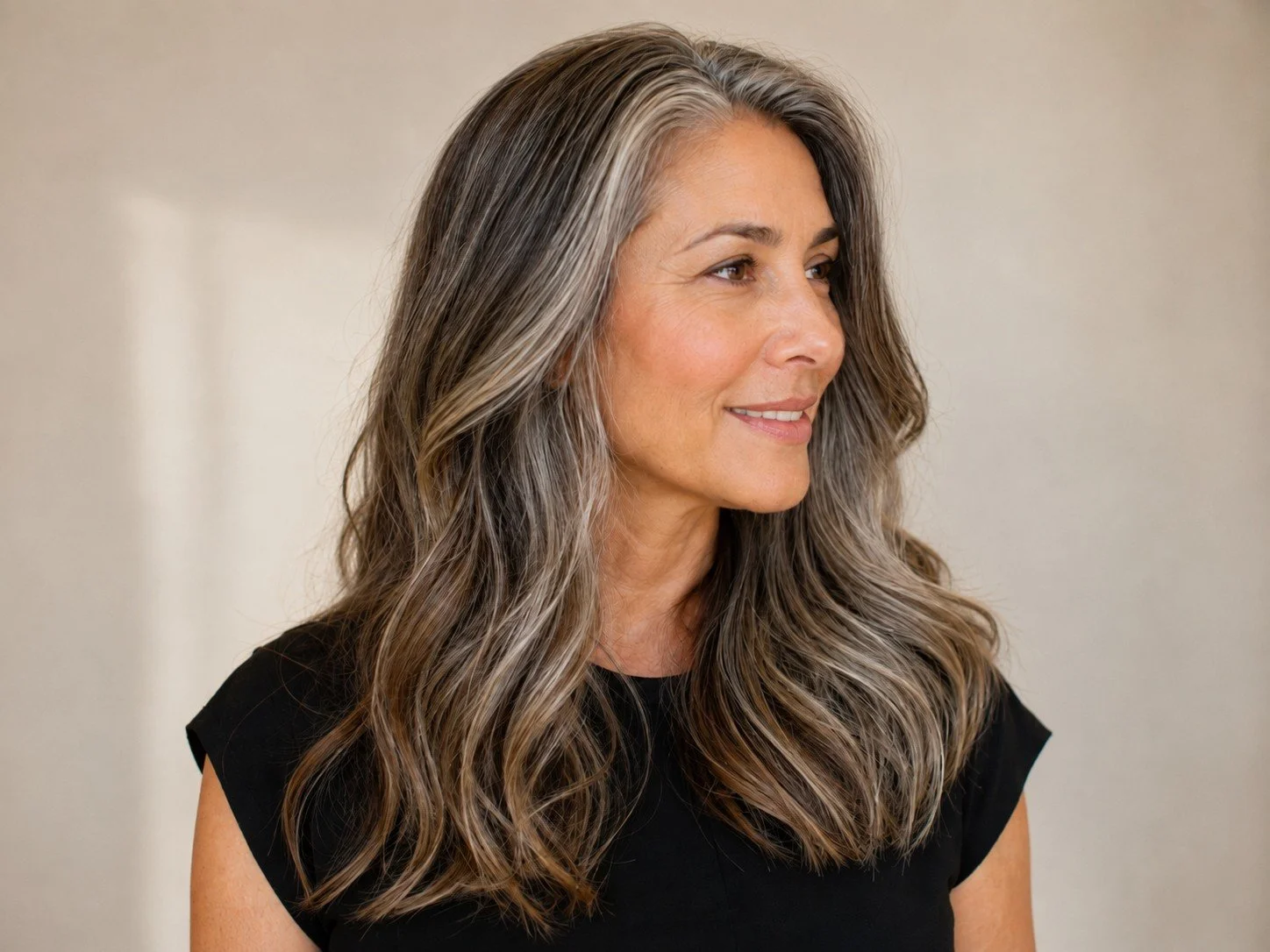
If you’re coloring your roots every four to six weeks and getting tired of how quickly the gray shows again, gray blending may be worth considering.
A root touch-up and gray blending are not the same thing. A root touch-up is meant to cover your gray. Gray blending is meant to soften the contrast so your natural gray works with your color instead of fighting against it.
When Root Touch-Ups Make Sense
If you want your gray fully covered, a root touch-up is usually the better choice. The roots are recolored to match the rest of your hair, which keeps the color looking more solid and consistent.
The downside is the grow-out. If your natural gray is much lighter than your colored hair, that line can start showing pretty quickly. For many people, that means coming in every four to six weeks.
Root touch-ups make the most sense if you:
Want full gray coverage
Like a more solid color
Don’t mind frequent appointments
Don’t want to see much gray between visits
Want a completely different all over tone than your natural color
What Gray Blending Does
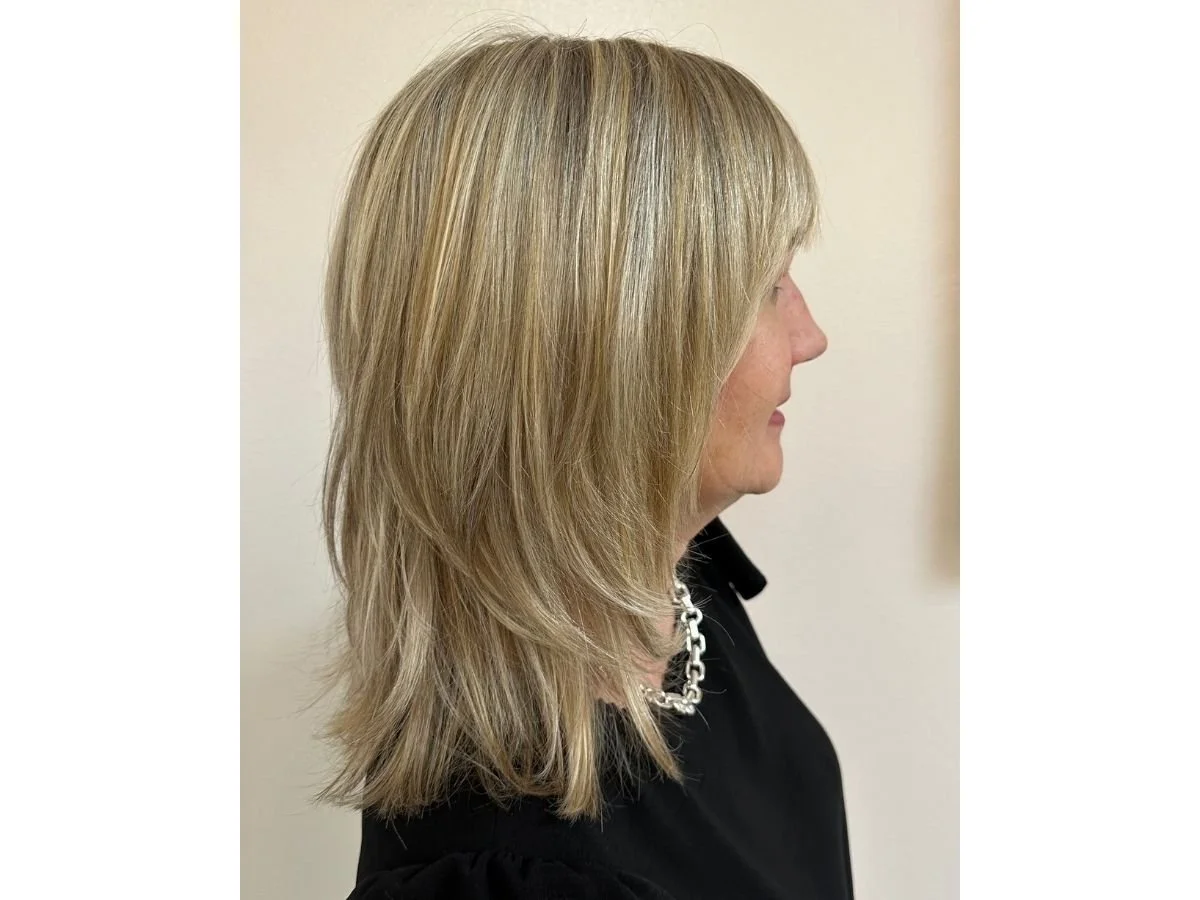
Gray blending takes a softer approach. Instead of covering every gray hair, I usually use a mix of lighter and deeper pieces to break up the contrast between your natural gray and the rest of your hair.
You do not have to become completely gray or silver. You can still look brunette, blonde, or dimensional while allowing some of your natural gray to show through. The difference is that the grow-out is softer.
Gray Blending vs. Transitioning to Gray
Gray blending and transitioning to gray are not quite the same thing. Gray blending is a color technique. We use highlights, lowlights, or a combination of both to soften the difference between your natural gray and the rest of your color.
You can gray blend without ever wanting to grow out completely natural. Gray transitioning is the process of moving away from solid artificial color and allowing more of your natural gray to grow in. If you have been coloring your roots or your entire head for years, gray blending can be part of that transition.
This is also why the first few appointments can feel a little different. You may still see a line of grow-out at first. That does not mean the gray blending isn’t working. You are still growing out the solid color while we gradually break up what is already on your hair.
It usually takes several appointments for that line to soften. Each time, we can adjust the highlights and lowlights, work through more of the old color, and allow more of your natural gray to become part of the finished look. As more of your natural gray grows in, everything starts working together more naturally and the grow-out becomes less noticeable.
The Part Most People Don’t Realize
If you have been coloring your hair darker for years, that old color does not disappear when you decide to start gray blending. It is still sitting through the mid-lengths and ends, and that old color often has to be lifted out gradually.
When darker artificial color is lightened, it usually exposes warmth first. It does not automatically lift to a clean silver or gray. Sometimes we need to lighten certain areas, add depth in others, and slowly work through the old color.
Trying to force all of that in one appointment is not always the best choice for the condition of your hair. I would rather take a slower approach and keep your hair healthy than push it too far trying to reach the end result in one day.
Which One Is Lower Maintenance?
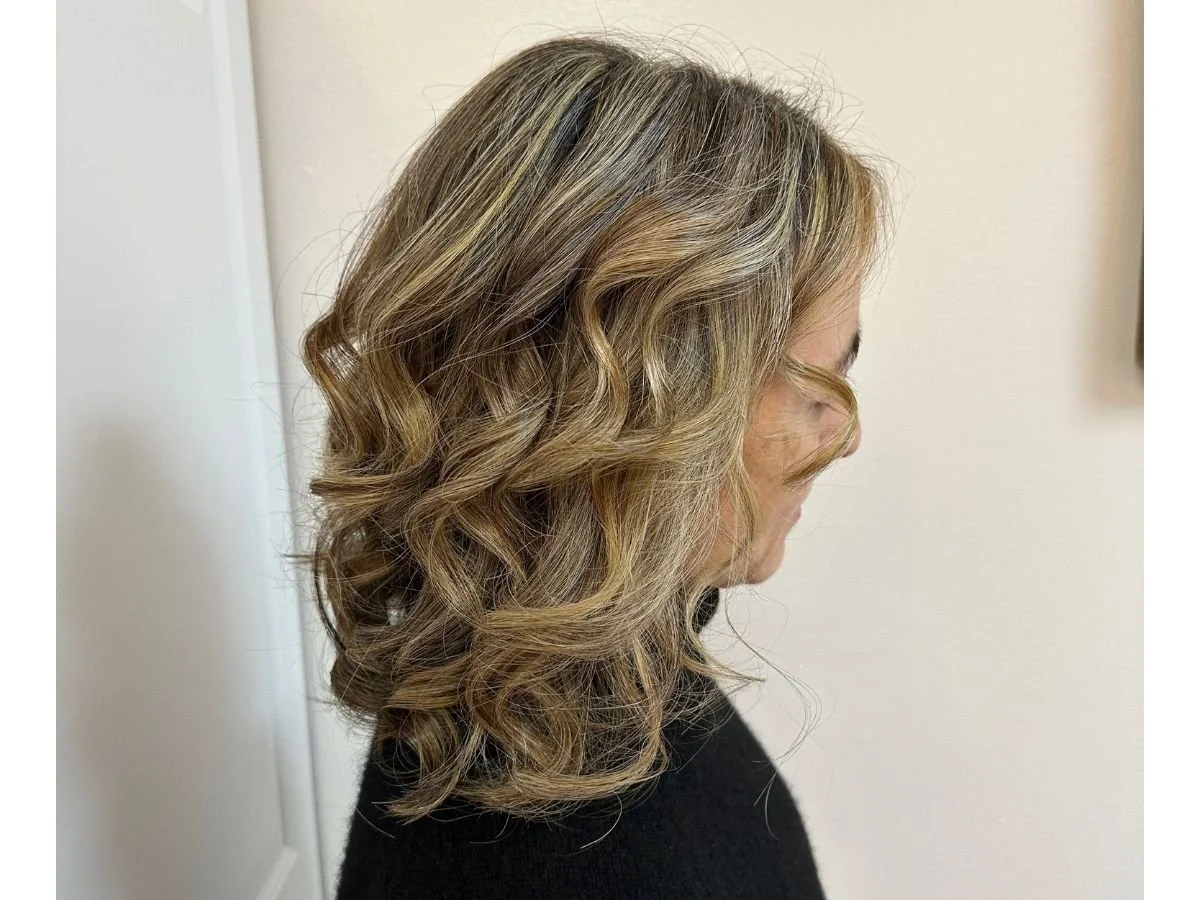
If you want full coverage, root touch-ups usually require more frequent appointments. If you are comfortable seeing some of your natural gray, gray blending usually gives you more flexibility.
It does not mean you never need your color done again. How often you come in depends on your natural color, how much gray you have, how much old color is still on your hair, and how light or dark you want your finished color to be.
Which One Is Right for You?
If your main priority is keeping your gray covered, stay with a root touch-up. You can always add dimension with highlights or lowlights to help break up the solid line as your roots grow in.
If you are tired of chasing your roots every few weeks and are ready to let some of your natural gray become part of your color, gray blending may be a better fit.
For many of my clients, that is the biggest reason they make the change. They are not necessarily trying to “go gray.” They want their color to grow out softer and feel less demanding.
Your starting point matters, especially if you have years of darker color on your hair. That is why I like to look at your natural gray pattern, previous color, hair condition, and maintenance expectations before deciding on a plan.
If you are thinking about gray blending, you can learn more about my new guest process and consultation at Sarah Rosenow Salon in Bellevue.